On July 18, 2025, I had the opportunity to deliver the closing keynote at the DH2025 conference, organized by the Alliance of Digital Humanities Organizations (ADHO). Here’s what I had to say…
Hello friends! Good evening, afternoon, morning, middle of the night — wherever in the world and time you are at the moment.
I had exactly three dreams for my professional career. And one of them was being invited to keynote this conference — something I, and perhaps many of you in this room, never thought would ever happen. So, I want to thank the local organizing committee and the program committee, and especially Daniel Alves and Gimena del Rio, for this incredible honor and for making one of my professional dreams come true.
Though, I do wish, it was under entirely different circumstances than the ones in which we live and work in 2025… and that’s going to be the subject of my talk.
I started this past academic year, perhaps like you, with some enthusiasm. Yes, the world was absolutely a mess, and it’s difficult to be truly excited about anything when there are existential threats to the planet — war, climate change, income inequality.
But, professionally, in my digital humanities life, things couldn’t have been better.
I was starting to work with wonderful colleagues at Performant Software on the public website and database for the Pan-African Data Project. Since 2020, I have been working with students, first at Salem State University, now at Dartmouth, to curate data sets on events related to Pan-Africanism. This social movement had a lot of traction during the first half of the 20th century and saw people from colonies in Africa and people of African descent around the world seeking common cause as they collectively agitated for an end to colonialism and for equal rights for Black people in predominantly white countries. Unfortunately, it’s an understudied area, and even the scholarship that exists tends to be dominated by just a few names — W.E.B. Du Bois, Kwame Nkrumah, Henry Sylvester Williams — men’s names.
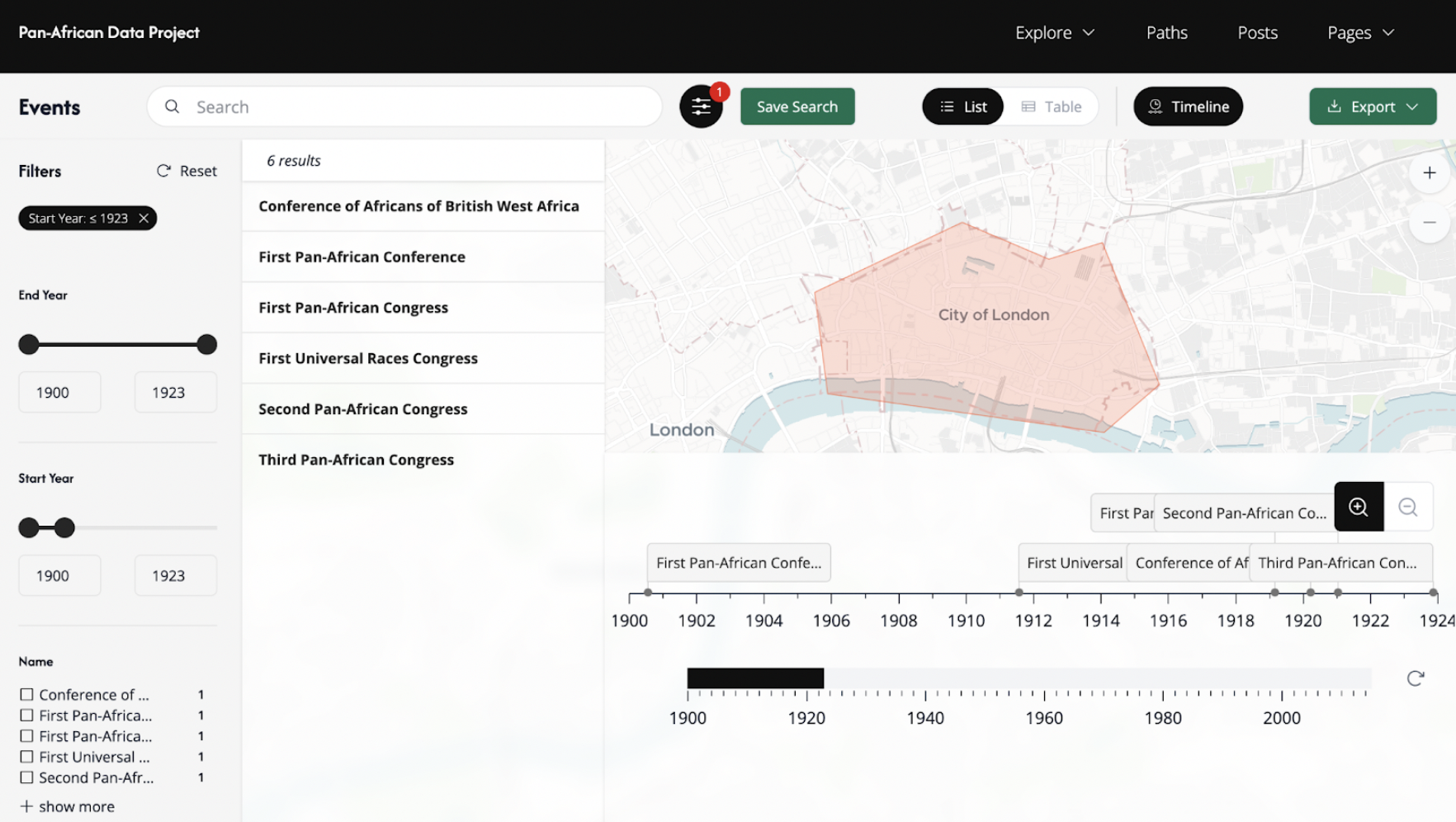
The goal of our research is to identify participants and broaden the scope of research into Pan-Africanism. Through archival work, we identified 1500 people with documented involvement in main Pan-Africanist gatherings. For the individuals in the data sets, we also, where possible, identified gender, places associated with them — where they were from, lived, worked — and their occupations.
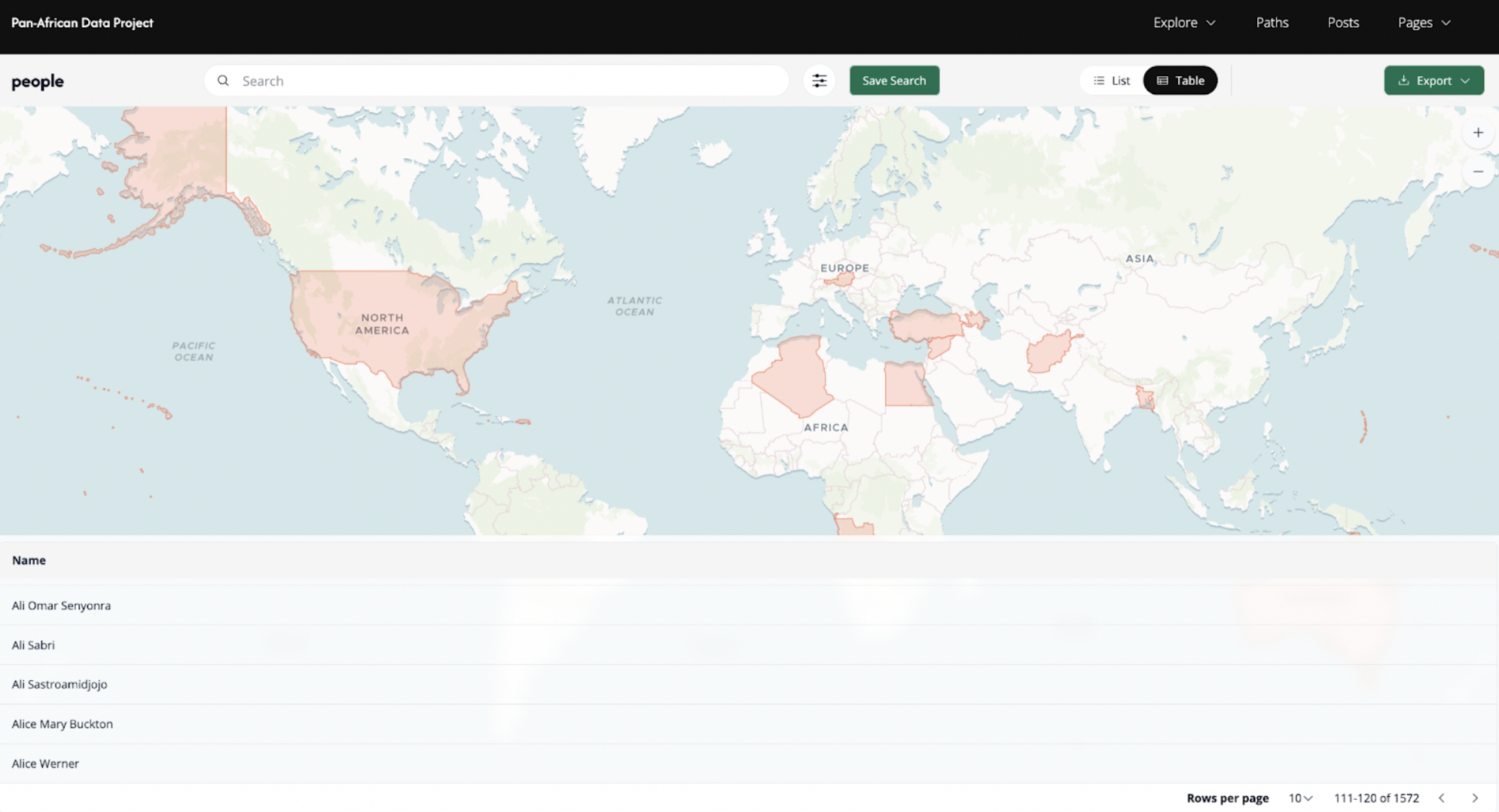
The site, which launches in October, will offer users the opportunity to explore the data. So, last fall, Jamie Folsom of Performant and I were going back and forth on scoping — what’s affordable now, what waits for a next phase when we’ll seek funding from the National Endowment for the Humanities.
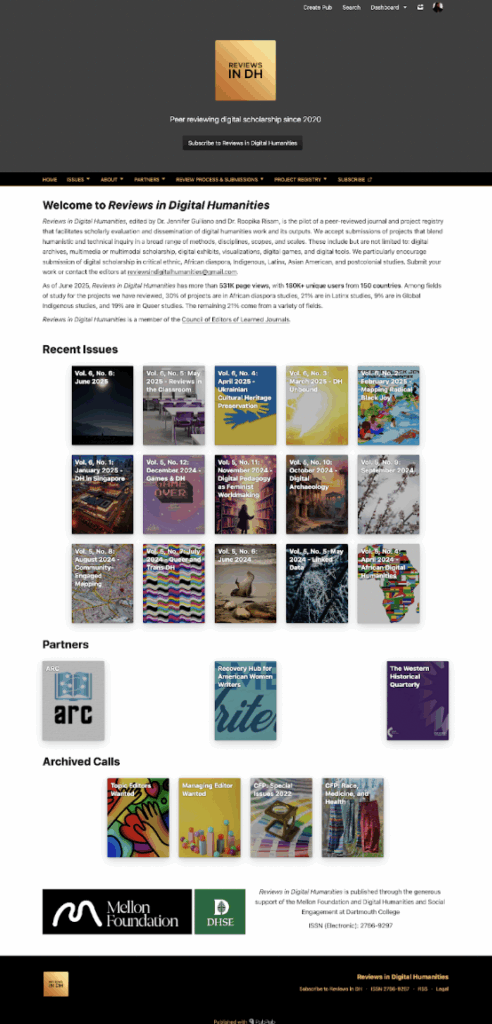
At that time, Jennifer Guiliano and I were wrapping up our future-planning efforts for our journal, Reviews in Digital Humanities.
Since 2019, the journal has been offering peer review of digital humanities projects and serves as a de facto discovery mechanism for projects, in the absence of other options, through our project registry, which allows readers to explore the 300+ projects we have reviewed alphabetically, by time period, by field, and by methods. We had finished working on our business model with the Nonprofit Finance Fund and had plans for securing a financial future for the open-access journal that didn’t rely on us and our institutions.
We had planned from the start to pass Reviews along in 2030 to new leadership, so it could grow and not stagnate with us — a plan that involved federal matching funds so that we wouldn’t have to only look to colleagues at institutions with a lot of resources.
I was also working on a project out of the American Academy of Arts and Sciences, funded through a cooperative agreement with the National Endowment for the Humanities and the National Endowment for the Arts. We were building a National Inventory of Cultural Organizations and I was the data equity person. My role was to help our team think through how to make sure we were including a diversity of organizations — diversity broadly construed, beyond race, gender, sexuality, to how comprehensive the inventory is — for example, not overlooking rural areas.
And I was hard at work on my first trade book, The Measure of Power, an 11,000 year plus history of data and how it’s shaped humanity — and actually its deadline is why I had to join you remotely.
Oh, and I was a department chair again. What could possibly go wrong?
Everything it turns out.
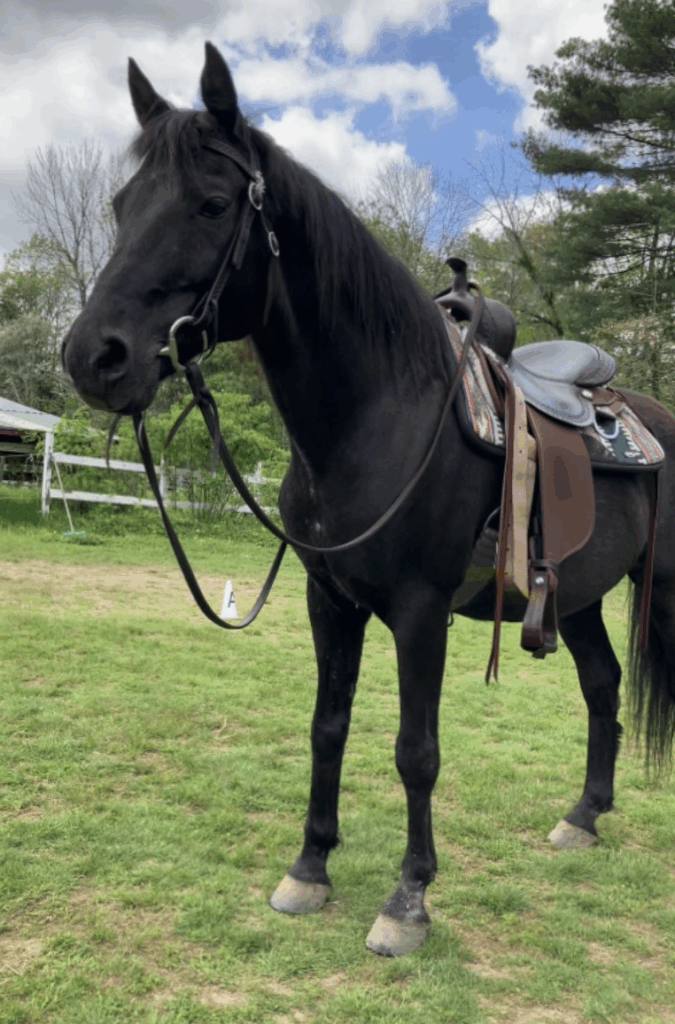
The day after the U.S. presidential election, I turned to my partner who, bless his heart, campaigned so hard for Kamala Harris that he received a handwritten thank you note from her, and said, “We’re going to have to accept that the good times are now over, and it’s just going to be all bad until we die. So, I’m buying a horse.”
But when I said that all the good times were over, I didn’t mean professionally, I wasn’t including my digital humanities life. I was speaking to the bigger picture, of safety, rights, justice, democracy.
It turns out… as those go, so too does digital humanities.
Fast forward to today:
Fortunately, when we were scoping for the Pan-African Data Project, I had in the back of my mind that we should come up with something that would be enough if we never got any more funding. That’s a good thing because the U.S. government now has a list of special dirty words, like “Black,” “cultural heritage,” and even, “historical,” that flag grants for extra scrutiny. So, it looks like big plans are off the table for the foreseeable future.
And the Office of Digital Humanities, which has made so much of the scholarship in our field and work that has been presented at our DH conferences possible, has been gutted along with much of the National Endowment for the Humanities which is mostly being redirected to celebrating American exceptionalism, not pointing out the bad stuff.
Because Jen and I positioned Reviews in alignment with our values, have to rethink our financial planning. We made underrepresented communities of scholarship within digital humanities our focus — quite successfully.
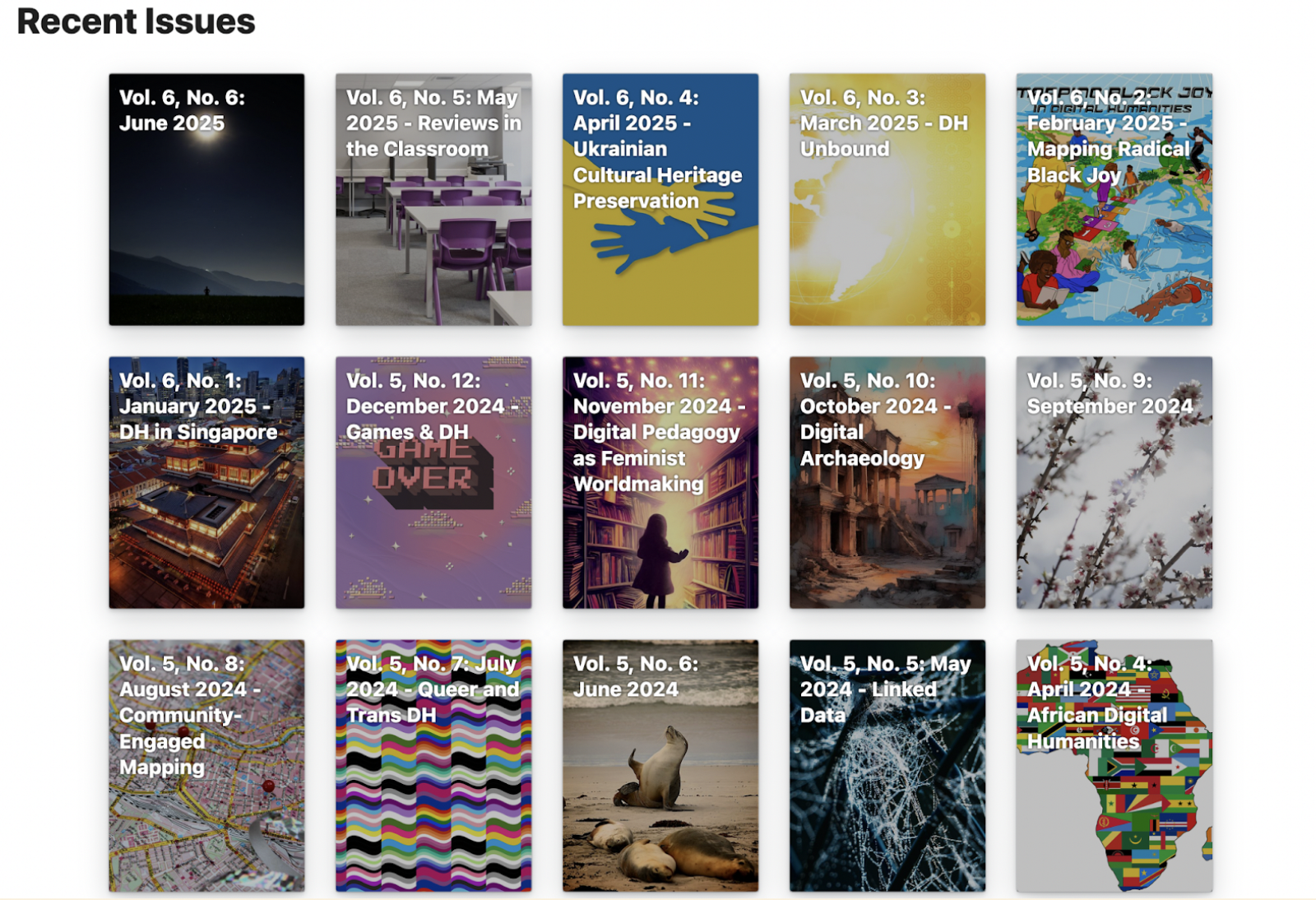
As of June 2025, Reviews has had more than 531K page views, with 180K+ unique users from 150 countries. Among fields of study for the projects we have reviewed, 30% of projects are in African diaspora studies, 21% are in Latinx studies, 9% are in Global Indigenous studies, and 19% are in Queer studies. The remaining 21% come from a variety of fields. So far, our support has come entirely from the Mellon Foundation but that will run out soon — and government funding isn’t going to be possible because we’re not going to put aside our commitment to supporting diverse digital scholarship. On top of that, our partner, the Knowledge Futures Group, which runs PubPub, an amazing platform for scholarly communities where Reviews currently lives, just announced that they will be sunsetting PubPub and regrouping, due to financial challenges. So we’re looking for a new platform too.
It bears mentioning that there are a number of wonderful colleagues from the National Endowment for the Humanities and Knowledge Futures Group who need jobs and would be wonderful additions to your organizations. Truly, brilliant thinkers on digital humanities and the humanities more generally.
Our work on the National Inventory of Cultural Organizations is on pause while we seek new funding — turns out my role, data equity, killed our federal funding, despite the valiant efforts of colleagues at the National Endowment for the Humanities. Our efforts to suggest that “equity” simply meant “comprehensiveness” and intellectual integrity for the project didn’t work.
And, when I set out to write a book about data and power, I couldn’t have anticipated that there would be a period of time when Elon Musk was *literally* in the White House — which is now where the book will end.
In the broader landscape of the world, these are “just” work problems – and they can feel trivial when there is so much more at stake. And these are also very U.S. problems, and other parts of the world have far more dire struggles.
But, at the same time, our worlds, especially our digital humanities worlds, are so deeply interconnected that we’d be remiss to see this as solely a U.S. problem and not as one with potential global impacts. For many of us, and I would argue for all of us one way or another, digital humanities is very much intertwined with social justice — whether it’s through the broader questions of access and accessibility, the responsibilities we have to cultural heritage as global citizens, or more specific foci on topics like race, gender, sexuality, and Indigeneity.
And that’s even besides the question of whether any of our colleagues around the world should even come here to the U.S. to visit — to and think and work together — since we cannot actually guarantee your safety.
So it’s not just our work that’s at risk. It’s the very conditions under which we do that work — our capacity to collaborate, to fund, to gather, to critique, even to dream. The infrastructures we once relied on — now feel as, if not even more, fragile and provisional than we even realized, even though we had healthy skepticism about long-term sustainability.
What I’ve come to realize over the last six months is that digital humanities, as so many of us practice it, was built for a different kind of world. A kind of beautiful and idealistic world, where yes, you had people like me ready to lob a critique about colonialism and race — but always with the belief that our work could do better. But the implicit assumption was that we could understand that world — and I don’t feel like that’s the case anymore. But as that world unravels, so must our assumptions — about sustainability, funding, impact, and even what counts as success.
Many of us came to digital humanities because we believed in the liberatory promise of information, in a relationship between access and equality. Or that digital platforms might redistribute power, offer possibilities for new voices and stories to emerge. That new tools might offer new paths where scholarship or even institutions have failed us.
This was not hopelessly naive. We’ve spent the last decade and a half complicating these questions — that not all information “wants” to be free, as Kim Christen has pointed out, that community sovereignty and authority over information is paramount. That techno-utopianism isn’t an answer. That there is more to digital humanities than building new tools.
As someone who has been deeply involved with these conversations — as part of a program committee for ADHO, as part of and eventually president of the Association for the Computers and the Humanities, I know, as many of you do, that these have been sometimes painful, as inevitable as they are in the growth of a field. But when I think about the program of this year’s conference vs. my first ADHO conference many moons ago, it’s incredible to see how far we really have come — that those years of figuring ourselves out have paid off — so thank you to this year’s program committee and ADHO leadership.
Digital humanities has opened doors. ADHO has become a more open community. We have made space — sometimes messy, imperfect space — for interdisciplinary work, for public work, for work by scholars long excluded from the center. We have found new ways to gather, to build, to share, to challenge power.
Many of us, around the world, are working in higher ed or cultural institutions that are vulnerable: to governments that don’t value what we do and cut our funding, to platform capitalism overrunning open web values, to surveillance. And that’s the best case scenario. The worst also includes the work we do being perceived as dangerous threats at the whims of authoritarianism. It includes the physical destruction of cultural heritage, of servers with digital cultural heritage, like we have seen in Ukraine, Gaza, Syria, Lebanon among other places. It includes the digital takedowns of content related to minoritized communities like we have seen in the United States — done in such crude fashions that, for example, in a military database of images, the Enola Gay, the B-29 bomber that dropped an atomic bomb on Hiroshima, Japan was removed because it had the word “gay” in it.
In environments like these, it’s so tempting to think “Let’s just find a workaround! We’re creative and iterative and can figure this out.” And many in our community have. I think to Saving Ukrainian Cultural Heritage Online (SUCHO) as a wonderful example. Or the Data Rescue efforts in the U.S.
There’s also another kind of mentality…. Maybe we just won’t use the bad words! Maybe we come up with euphemisms. And I am 100% guilty of that. It’s not entirely bad because the pragmatist in me says who cares what we call our work, so long as we keep doing our work. We just won’t call it “diversity,” we’ll just do it — and that might work, to an extent.
But I’ve been starting to think that we need some more strategy, to ask:
What kind of work can endure in this moment?
What kinds of infrastructure are worth building — or protecting — now?
What do we need, not to scale, but to survive?
And, through these shorter-term questions to keep in mind the larger one that I have been asking at talks over the last six months:
When we are in the position to rebuild, what will we need?
The first time I raised that question was at the Greater Boston DH symposium — I know some of you were there — where I had a mechanism for the audience to share their answers to the questions. There were many wonderful ideas: data, each other, tacos. But ultimately what rose to to the top, the largest word in the word cloud that the responses were generating (because it’s digital humanities so of course there was a word cloud), was community.
This focus on “What do we need?” may remind some of you of minimal computing — and that’s exactly where I am going with this.
Minimal computing grew out of a working group under Global Outlook::Digital Humanities — GO::DH for short — a special interest group of ADHO, more than 10 years ago. The early conversations involved a number of people, including Dan O’Donnell, Jentry Sayers, Élika Ortega, Alex Christie, Alex Gil, Kim Martin, and me. But it’s been a conceptual provocation as old as the Implementing New Knowledge Environments (INKE) Birds of a Feather Gathering in Havana in 2012, where certain scholarly practices had developed as a result of the constraints from the U.S. embargo against Cuba: sharing document libraries on USB, hacking SMS, “publication” via email chains in the absence of other venues.
The broader provocation of minimal computing was: how does one do digital humanities in environments of constraint — this could include lack of access to hardware or software, network capacity, technical education, or even a reliable power grid.
As can happen sometimes among us digital humanists, a lot of the early answers to that question of “how” focused on particular kinds of technologies: Arduino, Raspberry Pi, Jekyll — especially Jekyll, as if that was somehow the solution to all of our problems. (Spoiler alert: it’s not.)
But minimal computing was always more of a way of thinking than a particular, defined set of tools or methods. As early as 2015, Ortega and Gil articulated the fundamental and first question of minimal computing: “What do we need?” as a guiding principle for project design.
They drew on Cuban designer and theorist Ernesto Oroza’s concept of the “architecture of necessity,” defined as “a factual connection between needs, materials, technology, urban regulations, and social conditions.” Notably, especially for all of us now, Oroza’s visions emerged from the failures of the state giving rise to a predisposition to making do with what you have, grounded in care for social surroundings.
In 2022, Alex Gil and I revisited that question of minimal computing and added a few more when we edited a special issue of Digital Humanities Quarterly, the first, and to-date only, collection of peer reviewed scholarship on minimal computing. We noticed, in the many abstract submissions we received, that the tendency to equate minimal computing with particular technologies — and especially, Jekyll — had continued to persist, so in our introduction, we set about trying to address this.
Our gambit was that minimal computing isn’t a methodology or a set of methodologies, but a mode of thinking about digital humanities praxis that resists the idea that “innovation” must be defined by newness, scale, or scope. Instead, we argued that minimal computing first and foremost advocates for using only the technologies that are necessary and sufficient for developing a digital humanities project.
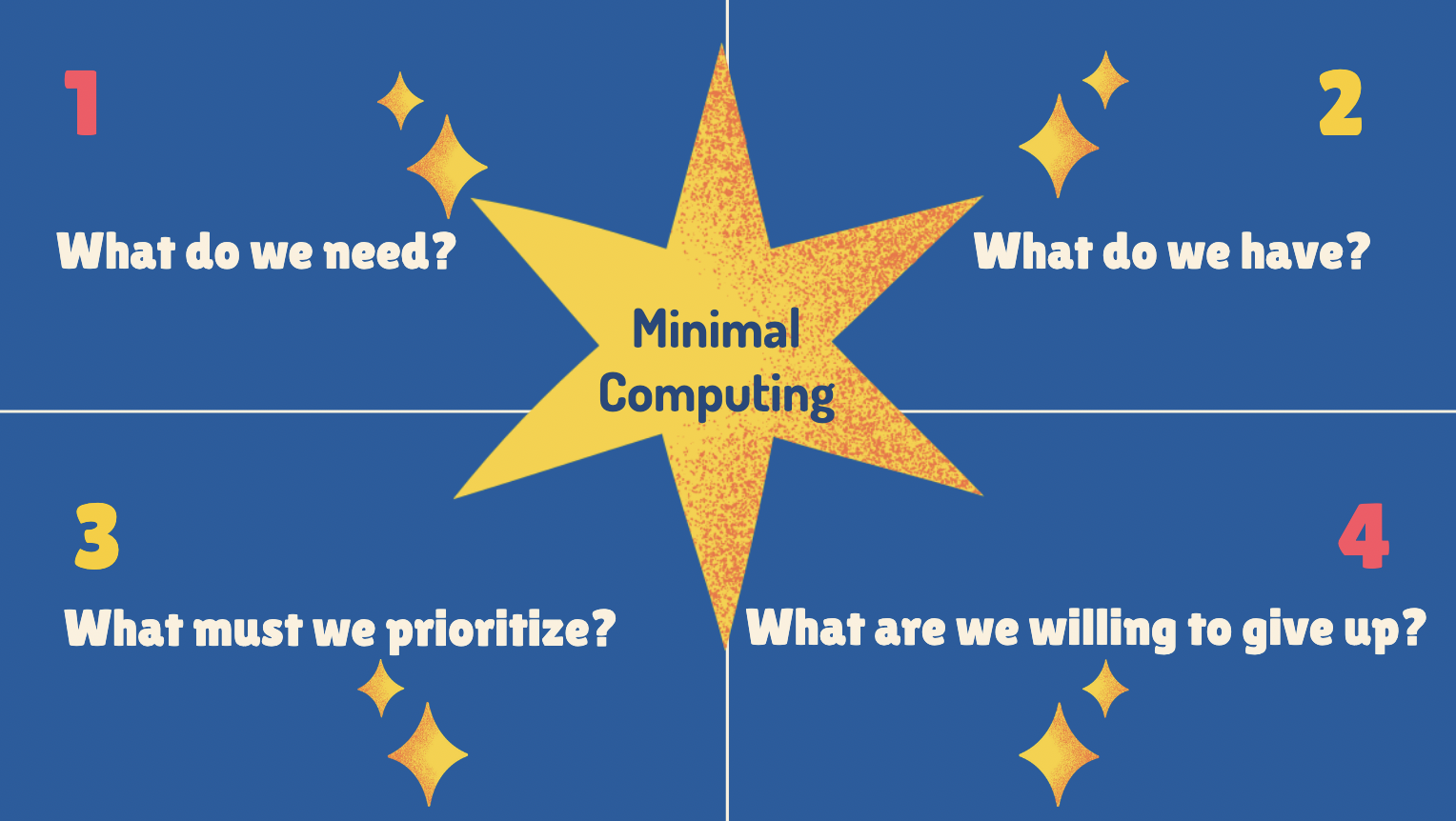
We provided four questions as a heuristic for determining what is necessary and sufficient. Of course, the first is “What do we need?” — that essential question Ortega and Gil posed. But we added: 2) What do we have? 3) What must we prioritize, and 4) What are we willing to give up?
“What do we need?” intends to cut through a tendency in digital humanities to valorize keeping pace with trends towards high-speed computing, or the latest computational technologies and to move away from an approach that is tool-driven simply for the sake of using a tool (*cough* generative AI *cough*). Often, when we pause to consider what we actually need to complete a project, the answer isn’t the latest and greatest, but the tried and true. The drive for innovation for its own sake can be a deterrent to actually completing — or even starting a project — especially in the particularly constrained environments in which most of us are working right now.
The question “What do we have?” is equally critical because it encourages us to focus on the assets we have available to us — rather than on a deficit mindset. Especially as funding narrows and precarity soars, we’re going to need to be more creative about what we have — what kinds of archives, kinds of resources, kinds of labor. For me, this has been about looking for potential for collaboration, support, internal resources to repurpose, steal, borrow, to identify feasible projects and paths forward.
Following the first two questions is “What must we prioritize?” Now, more than ever, we cannot treat all competing priorities as equally important — and certainly there are insights there for decision-making about tools, scale, scope, what is practically achievable.
And then the last question is “What are we willing to give up?” The limitations we encounter are unique but the result of some combination of the particularities of our work environments — maybe infrastructure, finances, labor, technical knowledge, all of the above — and we’re just never going to have it all.
If we are committed to continuing our work, despite the challenges of the moment and the ones ahead, there are tough decision to be made as we develop projects — taking into account what we need, what we have, and what we must prioritize. This could mean eschewing the latest, flashiest methods that would cost more money, time, and labor, in favor of a simpler approach that would be practically achievable with what we have. Or it may mean choosing a platform or tool that doesn’t meet every desired requirement that you or your team have but still makes it possible for a project — or some version of it — to move forward.
The “minimal” in minimal computing, therefore, is a stark contrast to an implied “maximal” in digital humanities projects — where maximal connotes design choices that are made without putting the question of what is necessary and sufficient at the heart of decision-making.
The value of minimal computing when defined as a way of of thinking, a provocation rather than a method or set of prescribed tools (or Jekyll!) is that this process can be deployed to design projects in a way that’s responsive to the circumstances of our work — or the broader goals that we have for it — and even ethical concerns that influence our practice.
Let me give you a couple examples:
When we started working on the site for the Pan-African Data Project, we planned from the start to build for the possibility of static deployment of the site for access in low bandwidth environments – which meant tradeoffs for other features that were lower priority, in favor of better accessibility for the site, particularly in the Global South, which is important considering the topic.
When Carol Stabile and I started working on Reanimate, which produces digital editions of writing by women in media studies, our platform decisions and our choice to not use TEI were made on the basis of not being able to get funding for the project and at that time not being in institutional contexts where we had access to much in the way of resources. We simply worked with what we had — we didn’t get everything we wanted, but we thought really long and hard about what the minimum viable product for the project was and then made decisions around how to realize that.
As I think about the contemporary landscape of the world, of higher education, of cultural institutions, I find myself being grateful that so much of my own work as a digital humanist has been undertaken in this way, through the lens of minimal computing, because I didn’t have a choice — I worked at a university where I didn’t have access to financial resources. And now, confronting a different register of challenges, I return to this minimal computing perspective because it feels like something a bit hopeful and strategic — and hope and strategy are two very important things to hold onto right now.
And there are broader uses for a minimal computing framework too because it’s expansive enough to apply to, really, whatever kinds of issues that matter most to you:
I think to colleagues who have navigated government censorship by choosing to make simpler sites but two of them – a public facing one with the regime friendly one, and an internal one with the true story, some of the added labor offset by the lower-fi technical decisions.
I think to the often-cited critiques of generative AI that focus on environmental consequences and of colleagues who are running local sources LLMs off solar power, thinking about how to weigh the affordances of an approach with the broader question of sustainability. Or colleagues at EPFL, ETH Zurich, and the Swiss National Supercomputing Centre, who have trained an ethical, multilingual, open source LLM that aligns with Swiss data protection and copyright laws and the obligations towards transparency built into the European Union’s AI Act.
I think to colleagues who have refused to chase funding cycles, choosing instead to build tools and projects slowly, in community, with whatever time and care they could spare — because the pace of justice is not the same as the pace of innovation.
These choices remind us that even now, we can choose how we work. We can prioritize care over speed, sufficiency over spectacle, and community over competition. Not because we have no other option, but because we know what kind of future we’re trying to build. So let’s ask, not just what is possible, but what is necessary — and what values should shape how we move forward.
Here is what I try to hold on to, to put at the center of my approach to digital humanities, while also trying to answer the question I raised early on: When we are in the position to rebuild, what will we need to have?
First, we will need to remember that access was never the end goal.
Access is not an achievement; it is an obligation. What matters now is what access demands of us. And that is accountability.
In the early days of digital humanities, we believed — fervently, sometimes breathlessly — in the power of access. We built digital editions, open repositories, online platforms. We spoke the language of openness, of democratization, of bringing knowledge to all. It was idealistic, and it was necessary. But it was not enough.
Because access without accountability risks becoming a kind of digital settler colonialism: where archives are opened but not contextualized, where stories are extracted from communities but not returned to them, where knowledge circulates but the people who shaped it are left behind. It is access that takes, not access that gives back.
I’ve written elsewhere about minimal computing as one strategy for resisting these extractive logics —not only of capital, but of scholarship itself. Minimal computing, as I understand it, isn’t just about how light our infrastructure can be. It’s about resisting the assumptions that underwrite so many of our defaults: the assumption of endless electricity, of English as the baseline, of computational capacity as a moral good — assumptions, that, by the way, are not shared by everyone in this room. It asks: What do we actually need to build? Who are we building for? And what happens when we build with an ethic of enough?
Accountability means answering those questions honestly. It means taking seriously the contexts of access: the people, the histories, the harms. It means not just “making things available,” but designing systems that ask who is missing and who is harmed when we don’t notice. It means prioritizing redistribution over visibility, transparency over polish, long-term stewardship over quick deliverables. It means remembering that the internet is not a neutral space — that power flows through cables and servers, through standards and platforms.
When I chose to work with the folks at Performant on the Pan-African Data Project, it was because their working model made forms of redistribution possible. Components built for one project become infrastructure for the next — and open source tools. What I support becomes a gift to someone else. It’s more than a tech stack — it’s an ethic of circulation, of accountability. And that ethic shaped our approach to the project: as I mentioned earlier, building for static deployment, minimizing bandwidth requirements, recognizing that access in Lagos or Kingston or Lusaka doesn’t look like access in Boston. The technology follows the politics, not the other way around.
We cannot rebuild on the same foundations that failed us. If we want just access, then we must also center just process — collaboration over extraction, credit over prestige, transparency over scale. That’s what accountability looks like. It is not a UX feature. It’s a commitment. It asks us to reconsider who we’re working for and what we owe them — not as charity, not as risk management, but as the very basis of scholarly integrity.
And perhaps most of all, it asks us to slow down. To resist the pressure to produce for the sake of visibility. To refuse the idea that access must always mean expansion. Because sometimes, accountability requires us to hold back, to protect, to consult, to wait.
Minimal computing taught me that limits are not only barriers to overcome, but guides toward care. The constraint of not having everything is not a flaw — it’s a condition. It forces clarity. It demands intention. And in a moment when clarity and intention feel like rare resources, that might be one of the most hopeful things we have.
So yes, access. But access that demands more of us — not just to open, but to tend. Not just to share, but to stand by what we’ve shared. Not just to build, but to repair.
Second: repair must be our ethic, and care our method.
The systems we work in are breaking. The institutions are fragile. And people — people are exhausted. Repair isn’t a metaphor. It’s a practice. It’s also slow, expensive, and deeply unsexy. But it’s how anything worth keeping survives.
In my own work with Reviews, Jen and I built the journal with care as our organizing principle. Not care in the sense of being nice or gentle, but in the feminist sense: care as labor, care as interdependence, care as structure. We built infrastructure that centers underrepresented scholars not just in authorship but in editorial leadership, in peer review, in visibility. But even that infrastructure is now vulnerable. It cannot be sustained on care alone.
So what does repair look like now? It looks like returning to the tools and practices we know work — even if they’re not flashy. It looks like making time for maintenance, not just invention. It looks like leaving behind clear documentation so someone else can pick up where you left off. It looks like slowing down the pace of a project so that everyone involved can stay whole. It looks like making things legible — processes, partnerships, politics — so others don’t have to start from zero.
It’s resisting the pressure to scale just because you can. It’s choosing to keep something small and strong instead of making it big and brittle. It’s not about staying in broken institutions out of obligation —but finding the cracks where something new might take root. Sometimes, that means staying. Sometimes, it means stepping aside. Repair is knowing the difference.
And it also looks like letting go of the things that are beyond repair. We are allowed to say: this platform has done its work, and we release it. This coalition no longer holds, and that’s okay. Care is not infinite labor. It is knowing what can still be mended — and what must be set aside.
And finally, solidarity isn’t an afterthought.
It’s not the closing keynote speaker invited to tell you everything I’ve just told you. Or diversity initiative on the side. It’s not what we add once the infrastructure is built. It is the infrastructure. A method, a stance, a commitment to build with, not just for. A refusal to build alone.
This is something that my colleague Jacque Wernimont and I have been thinking through at Dartmouth’s Digital Humanities and Social Engagement Cluster. What would digital humanities look like if we understood it in terms of wilding (a term Jacque brought to the conversation) or undisciplining digital humanities? Not just breaking down the field’s boundaries — but letting a thousand flowers bloom (thank you, Chairman Mao) in unruly, relational, unpredictable ways.
Wilding not as chaos but as care. Not as retreat but as reach. Wilding as refusal: of gatekeeping, of neat separations between the technical and the critical. Wilding as abundance: where code is theory, where refusal is method, where survival itself becomes scholarship. It means releasing control: allowing projects to grow where they’re needed, how they’re needed, even if they don’t resemble what funders or disciplines recognize as success.
Solidarity here means refusing tidy separations: between method and subject, infrastructure and interpretation, technical and critical. It means understanding that a community archive is theory. That writing documentation is pedagogy. That translating an interface is a politics of access. That the decision not to publish in English is not a limitation but a declaration: of voice, of audience, of world.
It also means building across difference — not flattening it. At Reviews, our topic editors lead work in African diaspora, feminist, trans, Indigenous studies, and more. This is not a menu of perspectives. It is the field. These scholars are not margin — they are epistemic engine. They remind us that solidarity is not an ethos we invoke but a structure we build. With rigor. With repair. With others. They show us what it means to take solidarity seriously: as method, as infrastructure, as scholarship.
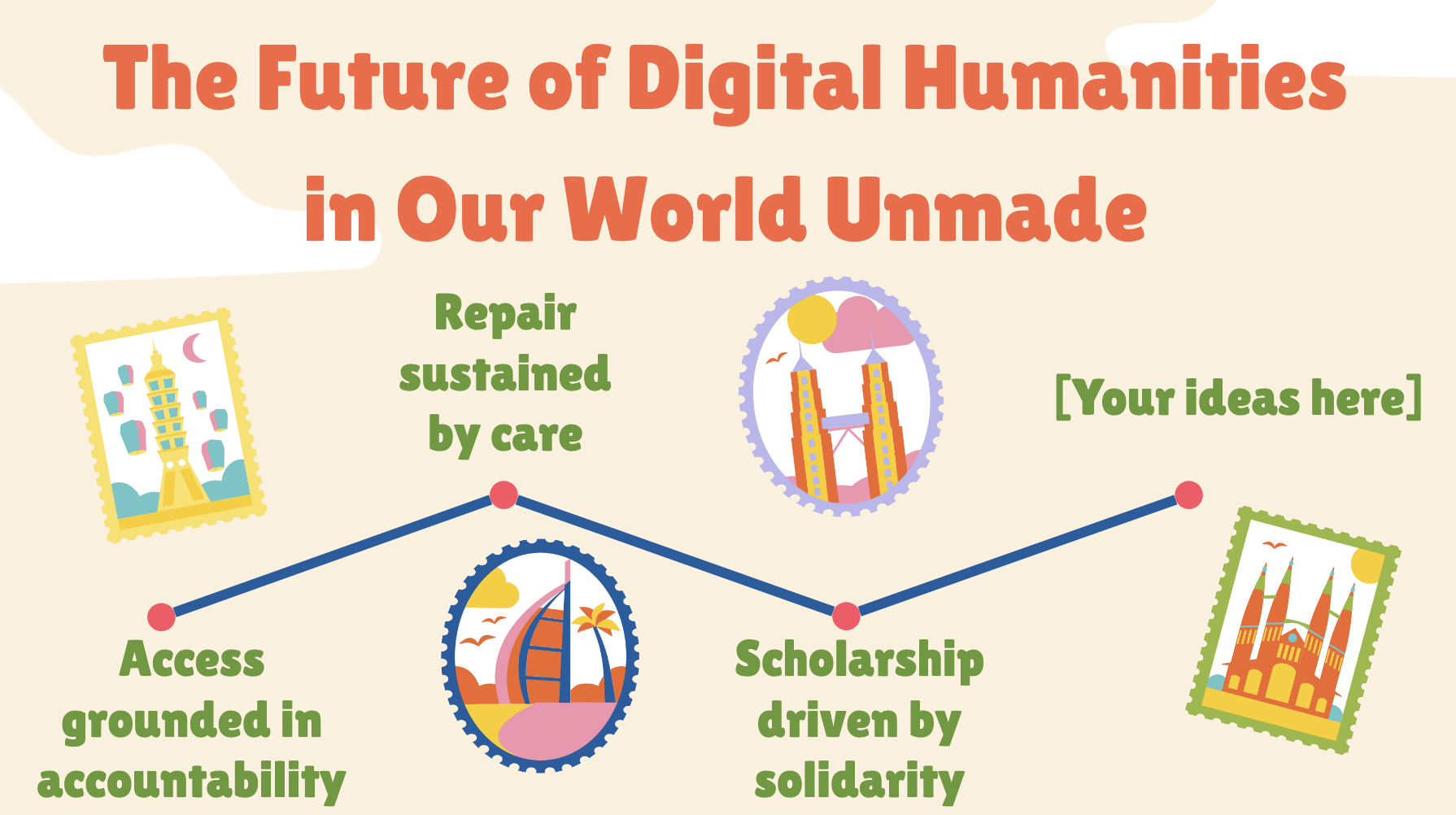
If there is anything you walk away from this talk with, make it this.
The future of digital humanities in our world unmade requires:
Access grounded in accountability.
Repair sustained by care.
Scholarship driven by solidarity.
But that’s not a blueprint. It’s not a center proposal or a five-year plan. It’s a question. What does it mean for you — in your contexts, your institutions, your communities — to take these seriously?
We are not starting from scratch. Even in crisis, we have models to draw from. They are often small, often precarious, often ignored. But they are real. And they are enough.